| |
CCINDLE Newsletter: 6th Edition
| |
Welcome to the CCINDLE project newsletter, a guide to our latest work and news as we approach the middle of our third year.
CCINDLE is an EU-funded Horizon Europe project studying the threats to democracy and feminism and the responses of feminist change-makers, engaging with them to strengthen their voices. CCINDLE works directly with feminist grassroots activists, institutional actors, and gender professionals, co-creating theoretical and practical knowledge on: - Anti-gender campaigns and how they challenge democracy, particularly through pathways to violence and the politics of knowledge.
- The futures of society envisioned in feminist theories and practices related to democracy in Europe, with respect to intersectional justice, inclusion, and participation.
- Feminist movements and feminist institutional responses to anti-gender and other anti-democratic forces.
| |
Read more about the project here. | |
| |
| |
| |
| |
A Day in the Life of a Feminist Politician: Episode Three of the Feminist Futures Podcast | |
Episode three of the Feminist Futures podcast explores the life of a feminist politician, with Catalan MP and former Minister of Equality and Feminism Tània Verge in discussion with host Alexander Murphy. How does anti-gender and anti-trans rhetoric fit into a far-right and populist landscape? And how can progressive voices use their platforms to counter them? Listen now via our website, Spotify or Soundcloud for insights on the realities of anti-gender forces in the halls of parliament. | |
| |
| |
| |
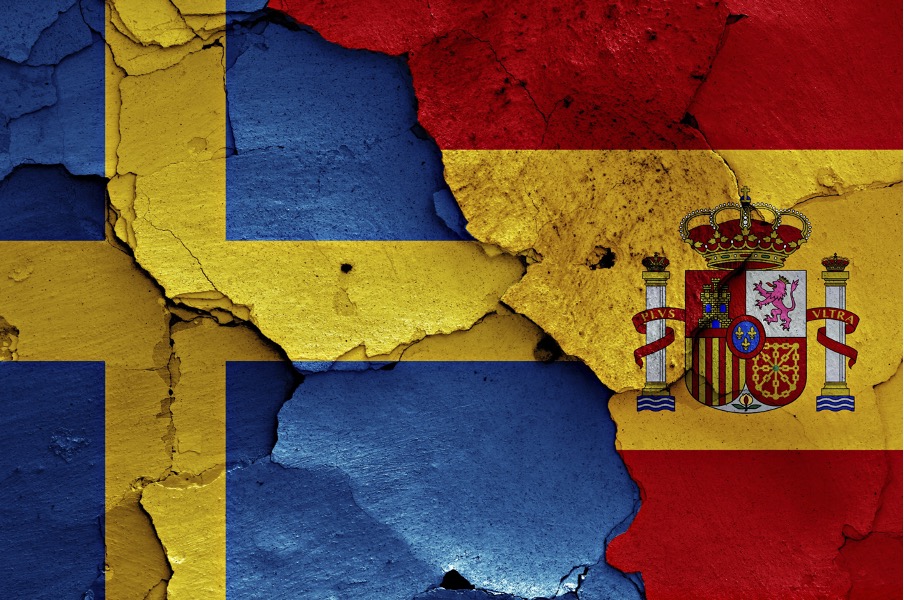
Gender, Migration, and the Nation: The Racialised Politics of Secularism and Religion in Sweden and Spain | |
Building on their research on anti-gender politics in Sweden and Spain, the latest CCINDLE blog from Silvia Díaz Fernández and Paloma Caravantes at the Universidad Complutense de Madrid dives deep into the intersection of gender, migration, religion, and national identity in these unique contexts. How do national stories inform the narratives of far-right forces in countries accustomed to strong legislative and policy records on gender equality? Read the full piece below. | |
| |
| |
| |
Impossible Solidarities: Women of Colour Activists and White Spaces | |
How can women of colour activists build and sustain solidarity in spaces often riven by intersecting inequalities? Akwugo Emejulu from the University of Sheffield and Leah Bassel from Coventry University discuss how unequal power dynamics around race, class, gender, sexuality, disability, and legal status are overlaid with the difficult emotions of activism. Amidst these challenges, optimism may be a tall order. Read their blog here. | |
| |
| |
| |
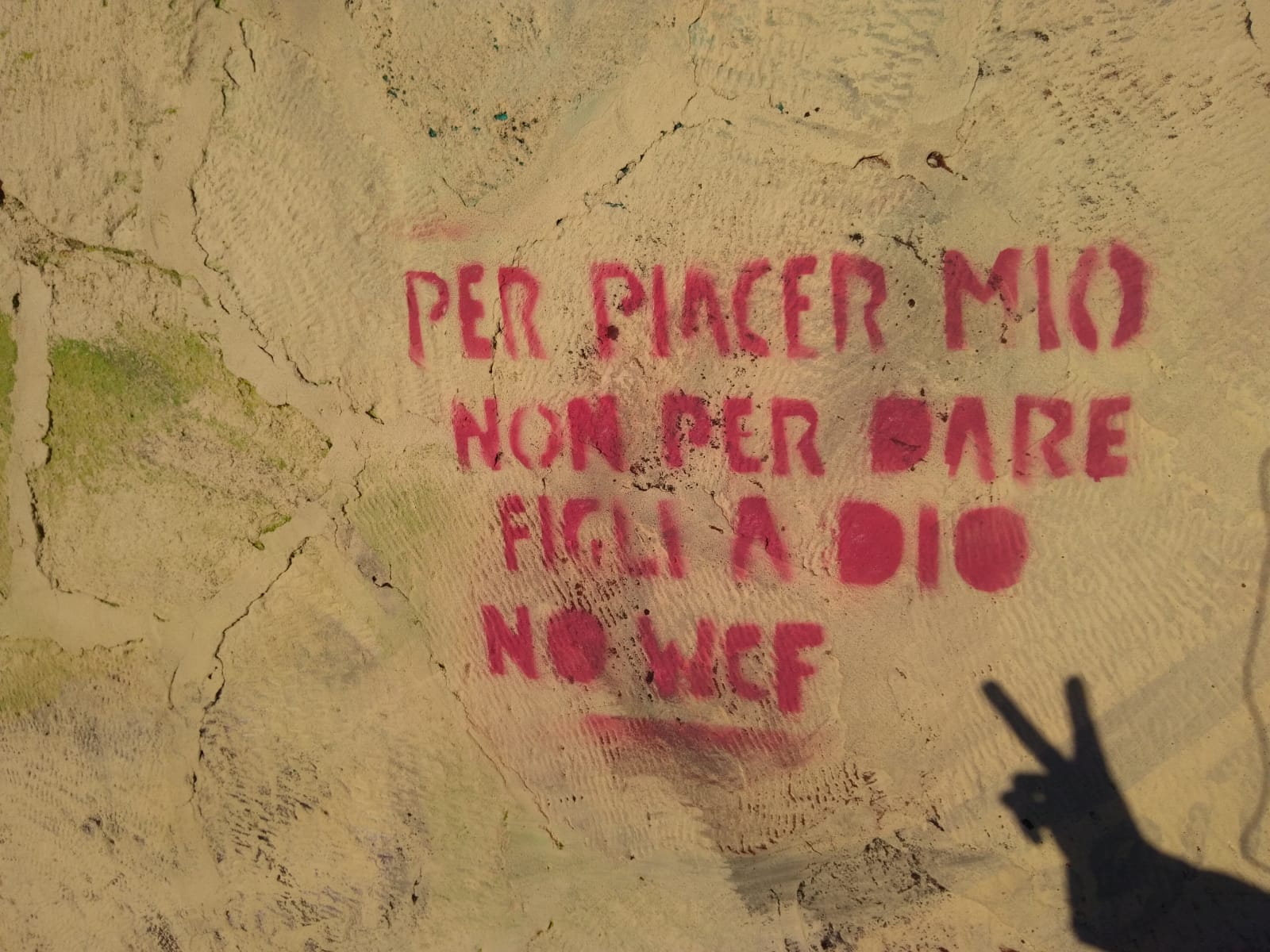
Mapping Resistances: Italian Trans-feminist Organisations Creating Grassroots Knowledge to Resist and Exist | |
After a period of fragmentation, Italian (trans)feminist mobilisations gained national momentum in 2016 when, inspired by the Argentinian movement Ni Una Menos (Not One Less) and catalysed by tragic femicides in the country, several grassroots groups came together to form the network Non Una di Meno (NUDM). Since then, Italian (trans)feminism has developed into a new phase of mobilisation, marked by hybrid actions that combine on-the-ground and online collective efforts with extensive processes of coalition-building to end systemic gender-based violence and discrimination, and to achieve genuine intersectional social justice. Read the full blog from Aurora Perego and Elena Pavan at the Università degli Studi di Trento.
| |
| |
| |
| |
Lessons from the Third Feminist Democracy Lab | |
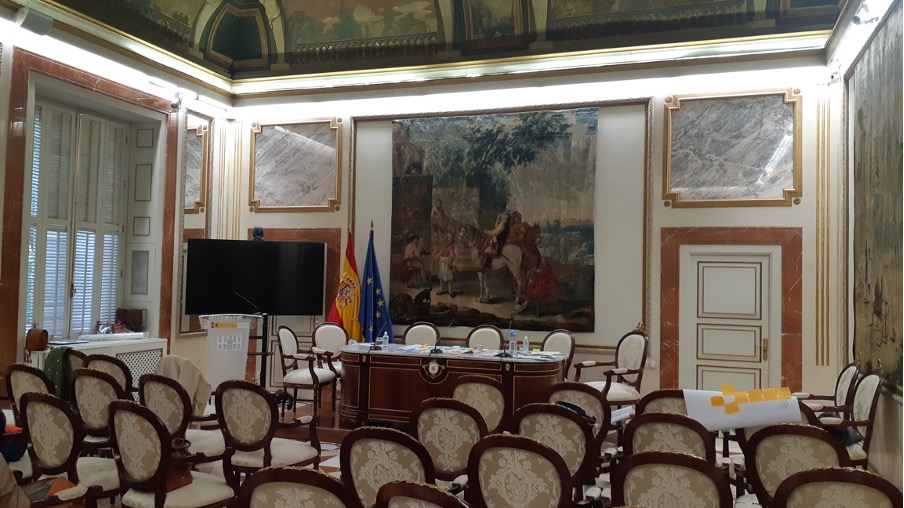
Last year, at the Centro de Estudios Políticos y Constitucionales in Madrid, around 25 politicians, researchers and activists gathered for CCINDLE’s third Feminist Democracy Lab. This workshop was the latest in a series that aims to break down siloed thinking, and co-create practical methods to counter anti-democratic and anti-gender movements and promote feminist democracy. In Madrid, the focus was on the challenges and solutions to international anti-gender mobilisations. Discussion covered vast political, geographic and cultural ground, drawing on interdisciplinary and international expertise to create novel insights. You can read the conclusions below.
| |
| |
| |
| |
| |
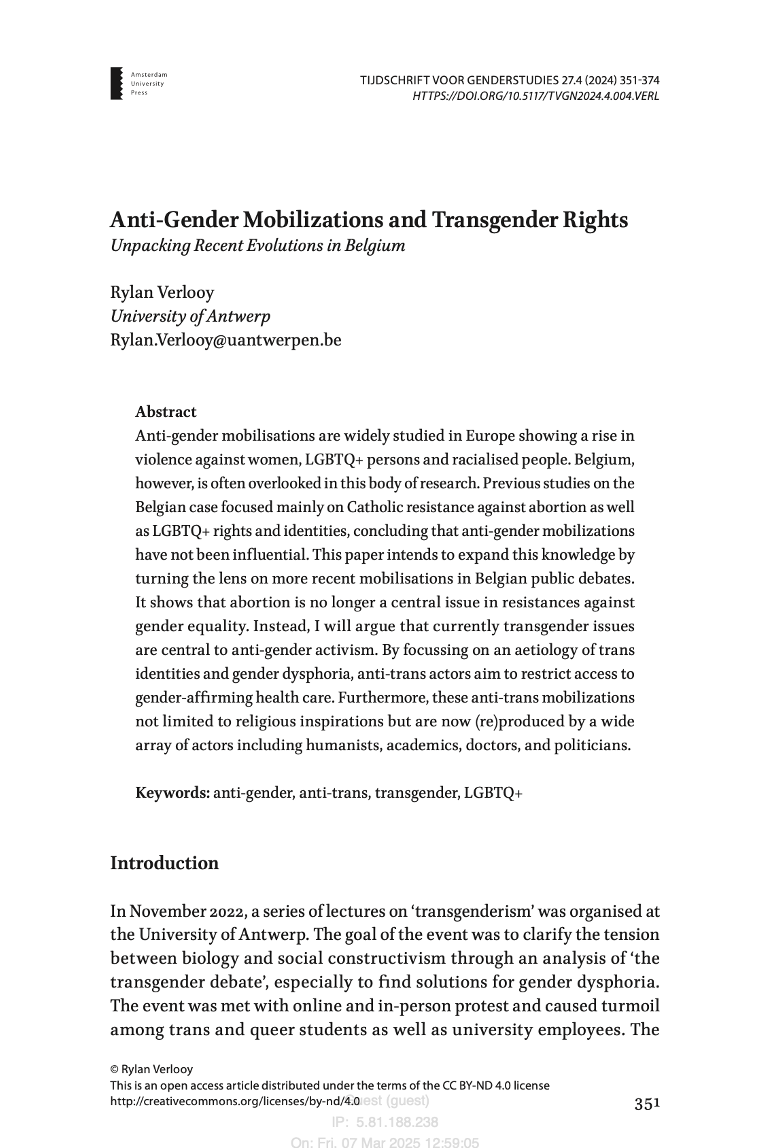
Anti-Gender Mobilisations and Transgender Rights: Unpacking Recent Evolutions in Belgium | |
A new CCINDLE article from Rylan Verlooy at the University of Antwerp explores the unique dynamics of anti-gender mobilisations in Belgium, where abortion, LGBTQ+, gender, and transgender rights have particular cultural salience. Read the full article on our website. | |
| |
| |
| |
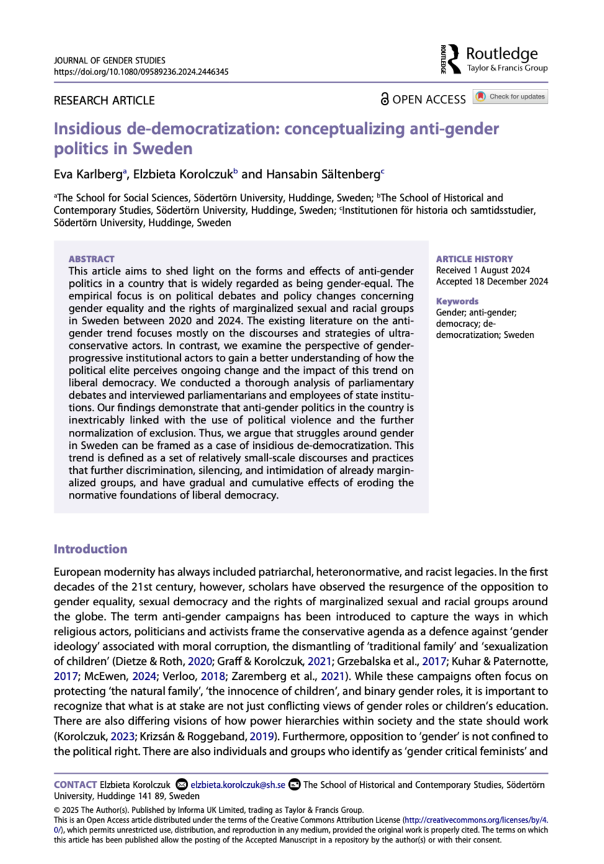
Insidious De-democratisation: Conceptualising Anti-gender Politics in Sweden | |
In an article for the Journal of Gender Studies, Eva Karlberg, Elzbieta Korolczuk and Hansabin Sältenberg analyse the form and effects of anti-gender politics in Sweden, a country widely regarded as progressive on gender issues. Despite this, its liberal democratic foundations are eroding. | |
| |
| |
| |
| |
CCINDLE is proud to associate with a number of sister projects across the feminism and inclusive democracy research spaces. In this section, we bring you updates from our colleagues. | |
UNTWIST is committed to disseminating its results in an accessible way in six languages to make our proposals easily accessible to civil society organisations and policy actors in different countries. We aim to offer tools that help address gender needs within a renewed democratic society. Reach out for guidance on how our findings can inform specific priorities, and check out our interactive web pages with the results of the UNTWIST project: - Work Package 1 reviews relevant literature on feminist theories and masculinity studies to develop the key typology for the project. Its results serve as the foundation for measuring the "feminist permeation" in gender-related policies and contribute to the design of analytical tools in subsequent work packages. Find the dynamic web for WP1 here and its interactive Observable here.
- Work Package 3 examines the representation of sex/gender and gender-based needs in public opinion instruments and sociopolitical surveys. Since these surveys are essential tools for political parties to understand citizens' demands, this package analyses which needs are present or absent in the surveys, whether they are biased toward specific feminist streams, and to what extent they influence public opinion. Find the dynamic web for WP3 here and its Observable here.
| | | |
| |
| |
| |
Funded by the European Union under grant No 101061256. UK consortium partners are funded by UK Research and Innovation (UKRI) under the UK government's Horizon Europe funding guarantee, grant Nos 10051932 and 10048433. Views and opinions expressed are those of the author(s) only and do not necessarily reflect those of the European Union or UKRI. Neither the European Union nor the granting authority can be held responsible for them. | |
| |