| | | | | | Transforming Rehabilitation: Personalised Care for a Better Quality of Life | | Welcome to our second PREPARE project newsletter, a guide to our latest work and news.
PREPARE is an EU Horizon Europe project (No. 101080288) which aims to improve the lives of people with chronic noncommunicable diseases by developing tools that will enable patients and their healthcare providers to select optimal therapy strategies. PREPARE will pave the way for personalised and holistic rehabilitation by combining real-world datasets using innovative machine learning techniques without sharing sensitive patient data.
We set ourselves apart by utilising cutting edge research in the clinical, socio-behavioural and public health domains and integrating sociodemographic, lifestyle and behavioural information. Through the application of statistical and AI learning methods, our team of experts will showcase the power of its state-of-the-art tool through pilot cases in nine prominent disorders. PREPARE’s data-driven tools will revolutionise the field of rehabilitation, contributing to better shared decision making and preparation for the patient’s future.
Our newsletter features our latest news, events and project updates along with highlights from our talented group of experts. Read more about the project here and check out our latest news below! | | | |
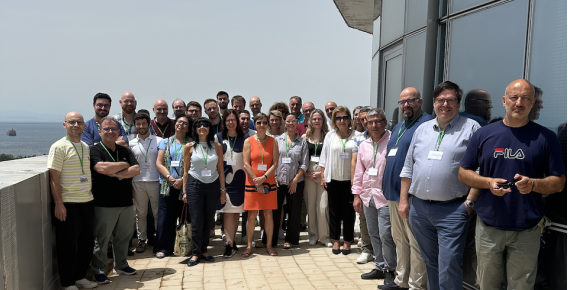
1Y CONSORTIUM MEETINGCelebrating one year of PREPARE | | | | In early June, PREPARE partners along with members of the Advisory Board and Ethics Committee gathered together in Thessaloniki, Greece at Aristotle University to celebrate one year of the PREPARE project. The meeting was marked by knowledge sharing activities and PREPARE's first roundtable event organised in cooperation with eight other EU funded projects under the domain of AI Health. Notable outcomes include a new Health cluster partnership with Microb-AI-ome, SPIDeRR, STRATA-FIT, STRATIF-AI, TARGET, AI4Lungs, CoMPaSS-NMD and COMFORT. Stay tuned for our second press release that will include specific takeaways and future motivations for PREPARE and the health collaboration cluster. | | | |
NEW PUBLICATIONFunctionomics: operationalising big data for personalised rehabilitation care | | | |
Personalised medicine is driven by the analysis of big data, commonly referred to as ‘omics’ research. Domains such as genomics, transcriptomics, proteomics, metabolomics, and radiomics have already shown great potential for revolutionising personalised medicine. Functionomics introduces a new dimension — the study of high-throughput data on daily functioning associated with health. In this blog, experts from Radboud University Medical Center discuss their recently published paper Operationalizing and digitizing person-centered daily functioning: a case for functionomics and the importance of maximising the potential of data by embracing FAIR principles in the field of rehabilitation. | | | | | | | | Explainable AI: PREPARE at the first international conference on AI Health
The PREPARE project was published in an abstract submitted by Trilateral Research to the first international conference on AI Health. The AIHealth 2024 conference aimed to encourage the exchange of ideas and results between academics and industry, to drive advancements in AI and health sciences. The publication explored the integration of Explainable AI (XAI) in healthcare, drawing insights from 3 EU-funded projects, including PREPARE. Read our full blog post here. | | OHDSI Rehabilitation Working Group: promoting better rehabilitation care
The OHDSI Rehabilitation Working Group is a monthly gathering of passionate rehabilitation scientists from all over the world. Chaired and led by PREPARE consortium partners, the mission of the working group is to promote better rehabilitation care by leveraging the OHDSI collaborative to enable large scale observational rehabilitation research. These working groups provide an opportunity for all community members to find a home for their talents and passions, and make meaningful contributions. Read more about it here. | | | | | |
EVIDENCE-BASED POLICYThe societal value of rehabilitation and evidence-based policy data | | | |
Primary osteoarthritis is a degenerative joint disease caused by the breakdown of cartilage, causing progression over time and increasing with age. The more a society ages, the more joint replacement surgeries are performed by orthopedic surgeons at the end stage of the disease, when considerable pain and the relative dysfunction make the activities of daily living (ADL) hard to bear. Just as in the Bone and Joint Decade, the need for prevention, treatment and care of people with musculoskeletal disorders continues to be a high priority. In this blog, project partner IRCCS Ospedale Galeazzi Sant’Ambrogio goes into depth about crucial challenges that go beyond Italian borders, highlighting the international importance of evidence based policy in rehabilitation. | | | | | |
OHDSI FRAMEWORK
Data Transformation in Hospitals | | | |
Vast amounts of data are generated within the healthcare industry through various sources such as electronic health records (EHRs), medical imaging, genomic sequencing, and administrative systems to name a few. This data presents both challenges and opportunities for healthcare organisations, researchers, and policymakers. An important process in the hospitals’ environment regarding this large amount of data is Data transformation, which focuses on turning raw healthcare data into a more usable and meaningful format for analysis, decision-making, and reporting. In this blog, project partner KIKLO discusses how this procedure is crucial for gaining insights, enhancing patient care, optimising operations, and complying with governing guidelines and provides an overview of key aspects. | | | | | | | |
Aristotle University has extensive experience in EU project management and participation, big data handling, decision support systems, web applications development, along with hypertension monitoring and rehabilitation. Aristotle University manages and coordinates the project, is responsible for liaisons with related projects, and leads the development and implementation of the patient analysis engine. Additionally, they are responsible for the implementation of the hypertension pilot case and will lead the development and implementation of the patient analysis engine.
| |  KIKLO is a spin-off company of Aristotle University. Its main aim is to transfer and exploit the technology developed in various research projects implemented by its founders. KIKLO is responsible for exploiting the OHDSI infrastructure, for assessing multiple observational data sources and mapping the data from the nine clinical cases on the Common Data Model, so that they can be used for Federated Analysis and Model development. In PREPARE, KIKLO is participating in integration and testing of the developed modules and in the Decision-Support and Data-Communication Platforms.
| | | | 
Erasmus Medical Center has broad expertise in various research fields, holds 330 projects funded by the European Commission, is a longstanding partner of OHDSI and the project leader of the EHDEN project. In PREPARE, they will provide a large dataset of hand and wrist disorders, expertise in prediction and stratification model development, and building tools for clinicians to interact with such models. Additionally, they will lead the evaluation of external validity and clinical applicability of these models, along with the impact on patient-centred care and shared decision-making.
| | 
University of Milano (UMIL) has conducted ongoing research into the pathological conditions of the TMJ musculoskeletal system since 1990, when the leading lab for scientific productivity and innovation in the area of TMJ Stomatognathic Apparatus Lab was founded. In PREPARE, in addition to leading a work package and specific tasks, University of Milano will contribute its extensive clinical expertise in dentistry and maxillofacial surgery area by providing support to the temporo-mandibular and neck related disorders pilot case. | | | | | | PREDICTIVE MODELS
Embracing Predictive Models in non-surgical Scoliosis treatment during growth: A game-changer for patient care | | | | Scoliosis is defined in 80–85% of cases as “idiopathic”, which is another way of saying that we currently don’t know the cause. Over 80% of these cases are diagnosed during adolescence, affecting about 2-3% of the population, with seven in ten cases being female. This condition, characterised by its unpredictability, poses a significant challenge in determining the most appropriate treatment options. However, recent advances in predictive modelling may significantly improve how we approach non-surgical scoliosis rehabilitation (so-called conservative treatment), providing a beacon of hope for affected families. In this blog, project partners ISICO discussed how integrating AI-based predictive models into managing idiopathic scoliosis is a significant leap forward.
| | | | | |
NATURAL LANGUAGE PROCESSING
Transforming Healthcare: How Smart Tech makes health records smarter | | | |
In the world of healthcare, making sense of health records is a big deal. What if doctors could quickly and accurately pull together information like symptoms, diseases, and treatments from records without any hassle? That’s where smart technology, like Natural Language Processing (NLP), comes into play. In the PREPARE project, we’re working on tools that make the process of pulling out important info from health records smooth and efficient. These tools use smart methods, like recognising and tagging medical terms, to automatically fetch crucial details. Medical experts get to double-check and add their insights to make sure everything is spot on. In this blog post, project partner Jožef Stefan Institute discusses some of these tools and the benefits they provide to the PREPARE rehabilitation tools. | | | | | | | | CoMPaSS-NMD: Young Investigators Training Initiative Webinars
Organised within the CoMPaSS-NMD framework, the Young Investigator Training (YIT) initiative is a platform for scientific exchange amongst young researchers, with the goal of education and training. From July 2024 to August 2026, YIT is offering a series of webinars with the aim of training a large group of investigators across Europe to use CoMPaSS-NMD tools and technology. For more information on the YIT and to register for the webinars, visit their dedicated webpage. | | STRATIF-AI: Workshop on New hybrid approaches to Precision Medicine - Machine learning, Generative AI, and Digital twins
On 5 November, STRATIF-AI will be hosting a workshop to discuss hybrid approaches, combining traditional bioinformatics and machine learning, with new generative AI approaches and mechanistically based digital twins. The event will be held in a hybrid format and will feature keynote lectures, talks selected from abstracts, a poster session. For more information and to register for the webinar visit here.
| | | | | | | | Connect with us on social media to stay up to date on all project developments! | | | | Our mailing address is: info@prepare-rehab.eu
| | | | | | | | | |